
The trouble with one-shot generation
A text-to-3D demo is easy to film. A brief goes in, a level comes out, and the clip ends just before anyone asks the second question: what do you do when it is nearly right?
With a single opaque step you have exactly one move — write the prompt again and hope. Nothing in the middle is addressable, because nothing in the middle was written down. Every interesting decision was made and discarded in the same instant.
Scenebrew produces four artifacts on the way from a brief to a scene. Each one exists so that there is somewhere to stand when you want to change one thing and keep the rest.
1. The Scene Design Document
The first thing the agent writes is prose. The SDD is Markdown with a YAML header: what the place is for, how it should feel, what a player does while they are there, what they ought to remember afterwards.
It is deliberately the least technical file in the set, and it is the cheapest place to change your mind. Cut the paragraph about a sheltered approach, write one about an exposed ridge instead, and everything downstream follows from the new text. No geometry has been committed yet, so there is nothing to undo.
2. The Player Experience Graph
The PEG is where the level stops being a description and becomes a structure: JSON, with spaces as nodes and the routes between them as edges.
What it deliberately does not hold is geometry. It says that a sheltered clearing opens onto an exposed climb, and that the climb is the only way to reach what waits at the top. It does not say how wide the clearing is.
That separation is the whole point. Pacing lives here — what a player meets, in what order, and what sits in between. Two levels built from one PEG can look nothing alike; two levels with identical art and different graphs play differently. Keeping the graph in its own file is what lets you revise the sequence without touching the terrain, and the terrain without disturbing the sequence.
3. The blueprint
From the PEG, the layout engine derives a blueprint: the footprint, the heightmap, where each space actually sits and how the ground carries you between them.
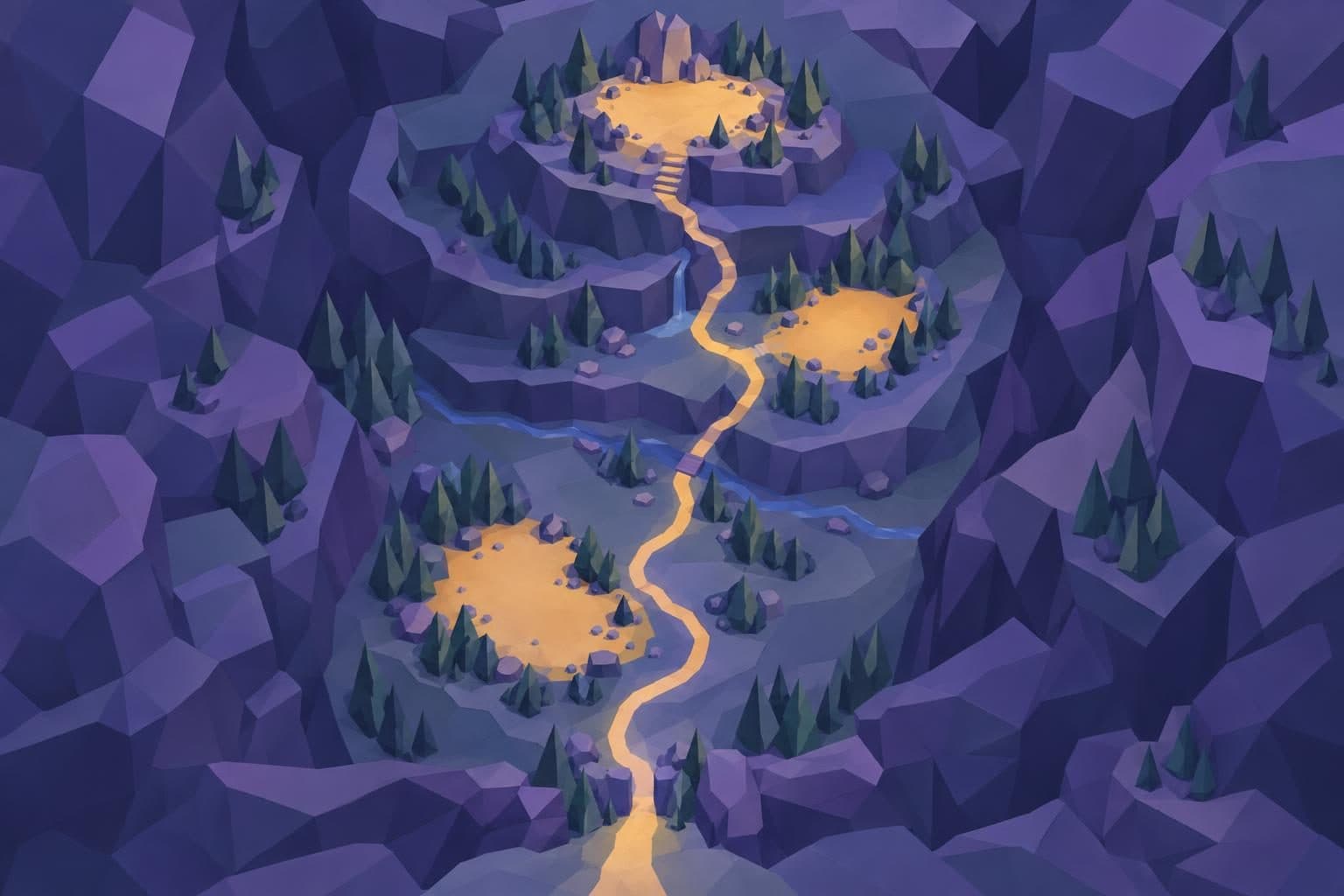
No language model takes part in this step. Given the same graph and the same seed, the layout engine produces the same blueprint every time — which is the difference between a tool you can iterate with and a slot machine. Change the graph and the layout changes for a reason you can point at.
4. The model
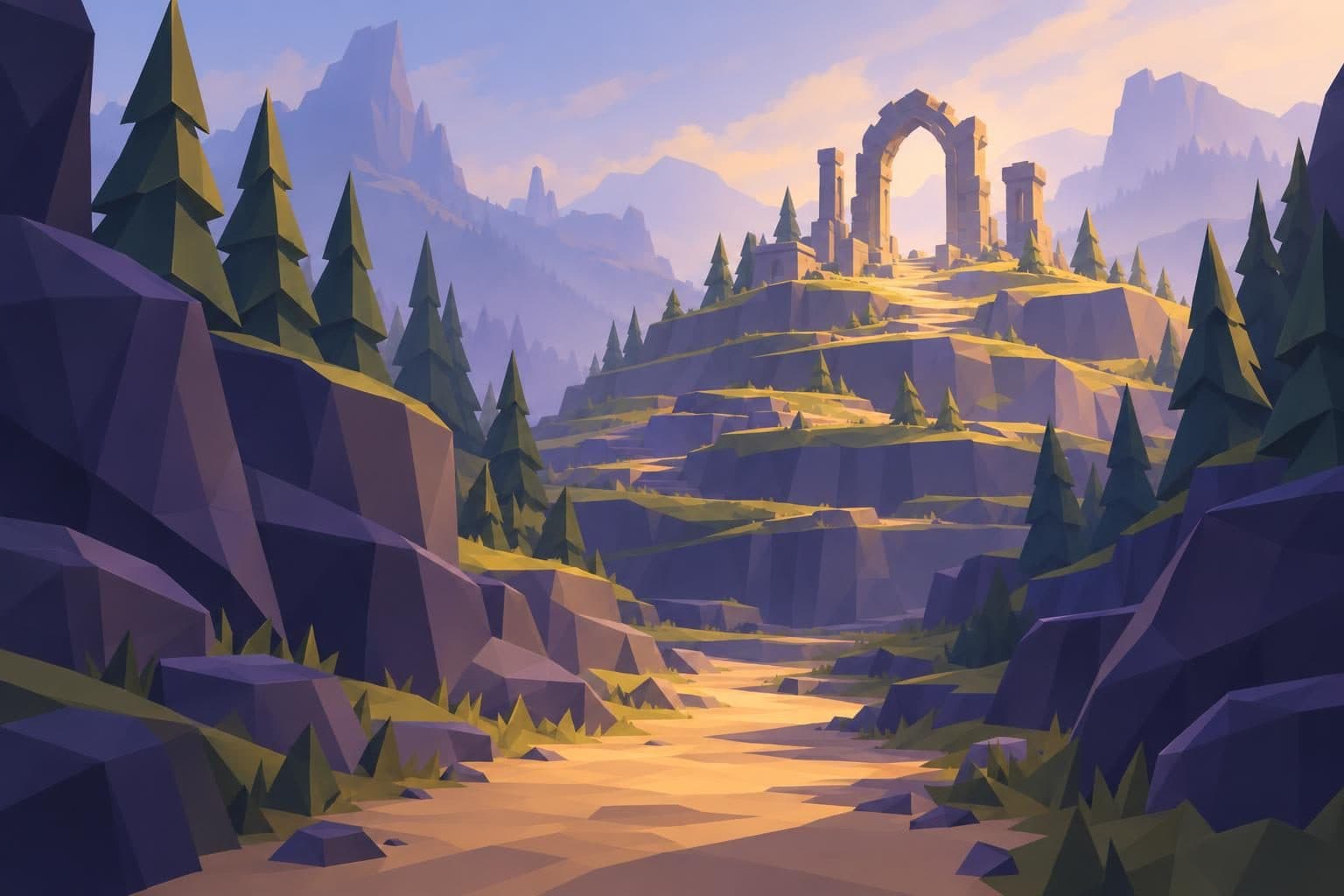
The last step cooks the blueprint into something you can open: a GLB, ready to import.
This step is deterministic as well. It carries no seed of its own because it has nothing random to seed — the blueprint already fixes the geometry.
Where the randomness actually lives
This is worth being precise about, because "AI-generated" tends to imply "different every time".
Two of the four steps involve a language model, and those two are not reproducible: ask twice and you will get two SDDs. The other two are reproducible — from a PEG onwards, the same inputs give you the same level.
So the variation sits in the two artifacts that are prose and JSON, the two you can read, diff and rewrite by hand. The reproducibility sits in the two that would be tedious to author yourself. That is the right way round.
It also explains the pricing without much need for a pricing page. Writing the SDD and building the PEG cost credits, because a model is doing the work. Generating the layout and brewing the scene are free, because they are computation.
Starting in the middle
Because the artifacts are files rather than internal state, you do not have to begin at the beginning. Upload an SDD you wrote yourself, or a PEG you assembled from a level you have already designed, and run only the deterministic steps. Nothing in the pipeline requires that Scenebrew wrote the earlier stages.
The same holds for the tools you drive it from. Scenebrew's MCP server exposes each step as its own primitive, keyed by a scene, rather than as a chat window — so an agent you already use can create a scene, hand it a brief and collect a GLB, with nobody watching a progress bar.
Where this stands
Scenebrew launches in Q4 2026, and until then the waitlist is the way in. The four artifacts are the part we would point at first, though: the agent is how they get written, but the files are the product.